Lumen Vietnam Fund

Blog

Belgium’s ASCO Industries plans $100 mln aircraft parts plant in central Vietnam

Belgium’s ASCO Industries plans $100 mln aircraft parts plant in central Vietnam

ASCO Industries plans to invest an initial $20 million in an aircraft components factory in Vietnam’s central city of Danang, with the investment potentially rising to $100 million for expansion.

The plan was revealed by ASCO Industries CEO Jerome Morhet at a meeting with Danang People’s Committee Chairman Nguyen Manh Hung last Thursday in Brussels.

The talks took place on the sidelines of a high-level meeting between Vietnamese officials and leading European businesses to discuss investment cooperation and the development of the city’s aerospace industry.

ASCO Industries specializes in manufacturing high-precision structures and components for the aircraft manufacturing industry.

Under an agreement signed in July 2026 between ASCO Industries and the Danang-Tech Park and Industrial Zones Authority (DSEZA), the Belgium company plans to build a 6,000-square-meter aircraft components factory with an initial investment of $20 million. The investment could increase to $100 million in the future.

Morhet is scheduled to meet DSEZA officials in early December 2026 to advance the factory development plan. The facility is expected to begin operations in 2027.

City officials outlined Danang's advantages and strategy for developing high-tech industries, emphasizing the attraction of projects with advanced technology, high added value, and the potential to integrate into global supply chains.

Hung asked DSEZA to engage with ASCO to implement the discussions and cooperation agreement, and to report the results to the city mayor before November 15, 2026.

In the first nine months of 2026, Danang attracted $681.55 million in foreign investment, including $522.2 million in newly-registered capital across 100 projects, according to the municipal government.

By far, the coastal city has had 1,162 foreign-invested projects with total registered capital of $11.28 billion.


Source: Hai Yen

Latest Posts

First renewable-powered electric barge advances Vietnam’s green logistics

First renewable-powered electric barge advances Vietnam’s green logistics

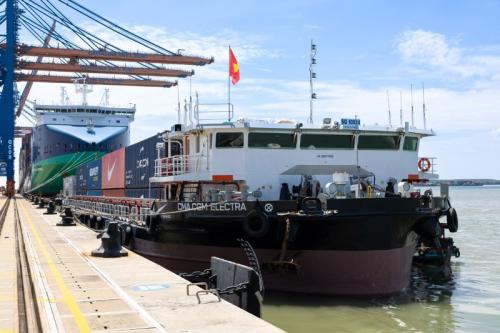
Powered entirely by renewable energy, the electric barge connects Nike’s inland consolidation hub in Ho Chi Minh City with the Gemalink deep-water port on a 180-kilometer round-trip route.

A collaborative project to deploy an electric barge between CMA CGM, Nike, and Gemadept was announced on October 29, marking a significant milestone in realizing green transition commitments.

Powered entirely by renewable energy, the electric barge connects Nike’s inland consolidation hub in Ho Chi Minh City with the Gemalink deep-water port on a 180-kilometer round-trip route. The solution is projected to cut approximately 778 tonnes of CO2 emissions annually.

The vessel pairs on-board battery power with Gemalink's on-site solar energy installation, creating an integrated system combining low-emission waterborne transport with renewable power generation. With a carrying capacity exceeding 50,000 TEUs per year, the electric barge offers a substantially more sustainable inland logistics alternative to road freight.

By combining electric transport, dedicated charging infrastructure, and renewable energy generation at Gemalink, this fully electric barge project demonstrates how innovation can turn sustainability ambitions into tangible, real-world solutions, said Mr. Chu Do Cong Khanh, Deputy CEO of Gemadept Corporation and Chairman of Gemalink Deep-Sea Port.

Mr. Khanh expressed high expectations for the model’s scalability, emphasizing its potential to accelerate Vietnam's long-term transition toward a low-carbon logistics network.

As Vietnam’s first fully electric barge project, the initiative stands as a clear testament to multi-stakeholder collaboration across ocean carriers, global brand owners, and port operators pooling expertise to decarbonize global supply chains, noted Ms. Christine Cabau, Executive Vice President of Assets and Operations at CMA CGM.

She highlighted that with strong potential for replication across other geographies, Vietnam is steadily establishing itself as a frontrunner in developing sustainable inland transport solutions while building domestic capacity across the renewable energy sector.

"This electric barge project further solidifies CMA CGM's long-term commitment to Vietnam and Southeast Asia, accelerating the broader transition toward sustainable shipping and logistics," Ms. Cabau said.


Vietnam holds 71 billion-ton CO2 storage potential, unlocking CCUS opportunities in oil and gas

Vietnam holds 71 billion-ton CO2 storage potential, unlocking CCUS opportunities in oil and gas

Vietnam is considered a country with immense potential to develop CCS and CCUS across its petroleum industry, especially via offshore carbon geological storage

Carbon capture and storage (CCS), as well as carbon capture, utilization, and storage (CCUS) technologies, are increasingly recognized as vital pathways in emissions reduction—particularly for hard-to-abate industrial sectors.

Vietnam is considered a country with immense potential to develop CCS and CCUS across its petroleum industry, especially via offshore carbon geological storage. According to assessments, the country possesses among the greatest CO2 storage capacities in Southeast Asia, with a potential of up to 71 billion tonnes of CO2 concentrated primarily across three geological regions…

Speaking at the workshop "Carbon Capture, Utilization, and Storage (CCUS) Technologies: Solutions to Accelerate Net Zero in Vietnam" on October 27, Dr. Nguyen Huu Luong, Senior Expert at the Vietnam Petroleum Institute, noted that current global operational CCUS capacity remains relatively modest, with approximately 64 million tonnes of CO2 being captured.

However, global CCS deployment is forecast to expand rapidly, surging nearly tenfold by 2030 to surpass 500 million tonnes per year.

Globally, there are 77 CCUS projects in commercial operation and 610 under various stages of development, with an anticipated average compound growth rate of nearly 40% through 2030. Key geological formations utilized worldwide for CO2 storage include depleted oil and gas reservoirs, deep saline aquifers, and unminable deep coal seams.

To date, cumulative global injected and stored CO2 stands at around 380 million tonnes.

"This is an extremely modest figure against a theoretical global capacity exceeding 10 trillion tonnes of CO2, demonstrating enormous headroom for growth in this sector," Dr. Luong said.

The International Energy Agency (IEA) has concluded that reaching Net Zero emissions by 2050—moved forward from the previous 2070 horizon—will require an additional 50% expansion in CCUS deployment. In 2023, the IEA also underscored CCUS as an indispensable, mandatory component to achieve Net Zero targets.

For Vietnam, joint research conducted by Petrovietnam (PVN) and the Japan Organization for Metals and Energy Security (JOGMEC) identified Vietnam as possessing among the highest CO2 storage potentials in Southeast Asia, estimated at approximately 71 billion tonnes. This storage capacity is concentrated primarily in three offshore sedimentary basins: the Song Hong Basin (39 billion tonnes), the Nam Con Son Basin (22 billion tonnes), and the Cuu Long Basin (10 billion tonnes). Crucially, Vietnam could capitalize on over 1 billion tonnes of effective storage capacity within depleted oil and gas fields alone.

Vietnam also holds distinct competitive advantages for CCUS, including 34 offshore oil and gas fields whose storage suitability has been preliminarily evaluated by Petrovietnam. Notably, in 2011, Vietnam became the first nation in Southeast Asia to successfully implement CO2 enhanced oil recovery (EOR) injection at the Rang Dong field.

CCUS scope in Vietnam’s decarbonization roadmap

Addressing the workshop, Deputy Minister of Agriculture and Environment Le Trong Yen emphasized that achieving Vietnam’s Net Zero emissions commitment by 2050 necessitates profound transformation across economic growth models—particularly as Vietnam targets ambitious double-digit GDP expansion—as well as production methods and natural resource utilization.

According to the Deputy Minister, this transition must run parallel with ensuring national energy security, ecological integrity, and industrial competitiveness while creating fresh development impetus. Every mitigation solution must be evaluated on scientific rigor, economic feasibility, and Vietnam’s unique practical conditions.

To lay the groundwork for real-world deployment, Mr. Yen called for clearly defining the specific role, positioning, and application scope of CCUS within Vietnam's national decarbonization roadmap. Concurrently, technical standards, scientific benchmarks, and safety protocols across the entire CCUS value chain must be thoroughly clarified.

Industry specialists noted that Vietnam has already established baseline prerequisites for CCUS development. The country possesses concentrated point-source CO2 emissions from power generation and heavy industries, vast offshore geological storage capacity in sedimentary basins and depleted fields, and mature oil and gas expertise, seismic data, and infrastructure that can be repurposed for CO2 transport, injection, and long-term storage.

Furthermore, the gradual emergence of a domestic carbon market, green finance frameworks, and legal improvements governing petroleum operations provide foundational momentum for CCUS execution.

Most notably, the amended Petroleum Law (Law No 10/2026/QH16), adopted by the National Assembly on August 23, 2026, and taking effect on March 1, 2027, introduced specific legal provisions governing carbon capture and storage operations linked to petroleum activities, establishing an initial regulatory cornerstone for field deployment.

Dr. Nguyen Thanh Tung, Deputy Director of the Vietnam Petroleum Institute, assessed that incorporating CCUS provisions into the revised Petroleum Law is a decisive milestone, providing the legal basis to transition from exploratory research toward commercial projects.

However, Dr. Tung stressed that to commercialize CCS/CCUS on an industrial scale, Vietnam must establish comprehensive guidelines covering the full project lifecycle: acreage block awards, investor selection, site characterization, injection licensing, operational monitoring, site closure, and post-closure long-term liability frameworks.

From an international perspective, delegates concluded that under appropriate market conditions, CCS/CCUS provides critical decarbonization pathways for hard-to-abate industries, spurs technological innovation, and enhances the export competitiveness of low-carbon goods. The degree to which mitigation credits are monetized on carbon markets will ultimately hinge on robust legal architectures, baseline carbon accounting methodologies, and stringent measurement, reporting, and verification (MRV) protocols.


Vietnam needs integrated solutions to accelerate clean energy transition: experts

Vietnam needs integrated solutions to accelerate clean energy transition: experts

Vietnam’s favourable conditions for expanding clean energy sources, however, the energy transition still faces significant challenges.

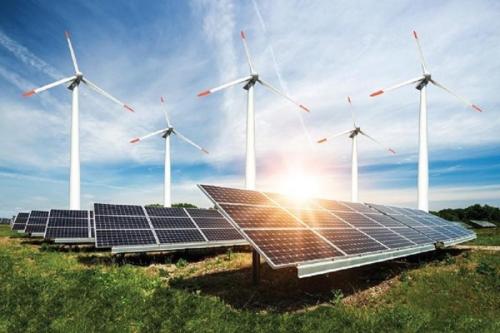
Vietnam’s solar and wind power capacity has expanded significantly, with the two sources accounting for approximately 19% and 7% of the country’s electricity mix, respectively, in 2025, according to Ms. Nguyen Thi Thu Huyen of the Institute of Energy under the Ministry of Industry and Trade.

Speaking at the recent “Clean Energy for a New Era of Growth” forum, Ms. Huyen said the figures highlighted the increasingly important role of renewable energy in Vietnam’s power sector.

Vietnam has favourable conditions for expanding clean energy sources, including onshore and offshore wind, rooftop solar, biomass and emerging energy technologies. Under power development planning scenarios, solar power capacity could reach hundreds of thousands of megawatts, while offshore wind capacity could exceed 100,000MW by 2050.

However, the energy transition faces significant challenges. Growing electricity demand from data centres, artificial intelligence and electrified transport requires reliable, stable and affordable power supplies. Meanwhile, the existing transmission grid, dispatch capabilities and energy storage infrastructure have yet to keep pace with these demands.

Experts at the forum proposed a range of long-term solutions. Dr Vo Tri Thanh, Director of the Institute for Brand and Competitiveness Strategy Research, stressed that the transition to clean energy must follow a roadmap suited to Vietnam’s economic development. Adjustments to power planning should take into account implementation capacity, access to partners and the ability to master technology.

He also highlighted the need for coordinated efforts to address policy and regulatory challenges, mobilise investment, develop energy infrastructure, strengthen technological capabilities and train highly skilled workers.

Dr Mai Duy Thien, Chairman of the Vietnam Clean Energy Association, said expanding clean energy required more than simply increasing power generation capacity. Instead, a comprehensive approach was needed, integrating planning, transmission, distribution, demand-side management and financing.


See all blog