Lumen Vietnam Fund

Blog

Da Nang targets 11% growth in 2026 as Quarter IV challenges mount

Da Nang targets 11% growth in 2026 as Quarter IV challenges mount

The central city of Da Nang is targeting annual gross regional domestic product (GRDP) growth of 11–11.22% in 2026, but must achieve 12.8–13.6% growth in the fourth quarter as the rainy season and a tourism slowdown put pressure on key economic sectors.

The revised target sets a demanding pace for the city, the largest centrally-governed city in the central region. After GRDP grew 10.31% in the first nine months, Da Nang must accelerate sharply in the final three months, when adverse weather can disrupt construction and dampen tourism and service activities.

Statistics show GRDP expanded 11.83% year on year in the third quarter, placing Da Nang seventh among Vietnam’s 34 provinces and centrally governed cities for quarterly growth. Its nine-month growth rate ranked ninth nationwide and third among centrally governed cities.

Tourism and construction face a demanding year-end target

Services and tourism account for more than 55% of Da Nang’s economic structure, making their performance critical to the city’s year-end target, according to Tran Thi Thanh Tam, director of the Da Nang Department of Finance. Tourism, services and construction will remain the main focus of efforts to sustain growth.

The city plans to maintain tourism promotion and organise events, festivals and night-time economic activities tailored to rainy-season conditions to attract visitors. It also intends to support businesses in slower-growing industries, including electricity, wastewater and waste management, and mining, while stimulating commercial and service activities.

Tam highlighted the need to help large industrial producers access capital and expand operations, while removing infrastructure bottlenecks affecting industrial clusters.

“Tourism and services must be treated as a top priority, with all sectors working proactively to meet their growth targets,” she said. Other measures include stimulating consumption, expanding e-commerce, improving distribution infrastructure and strengthening domestic markets. The city will also help local businesses place their products in distribution channels nationwide, enhance production capacity and build stronger brands for Da Nang products.
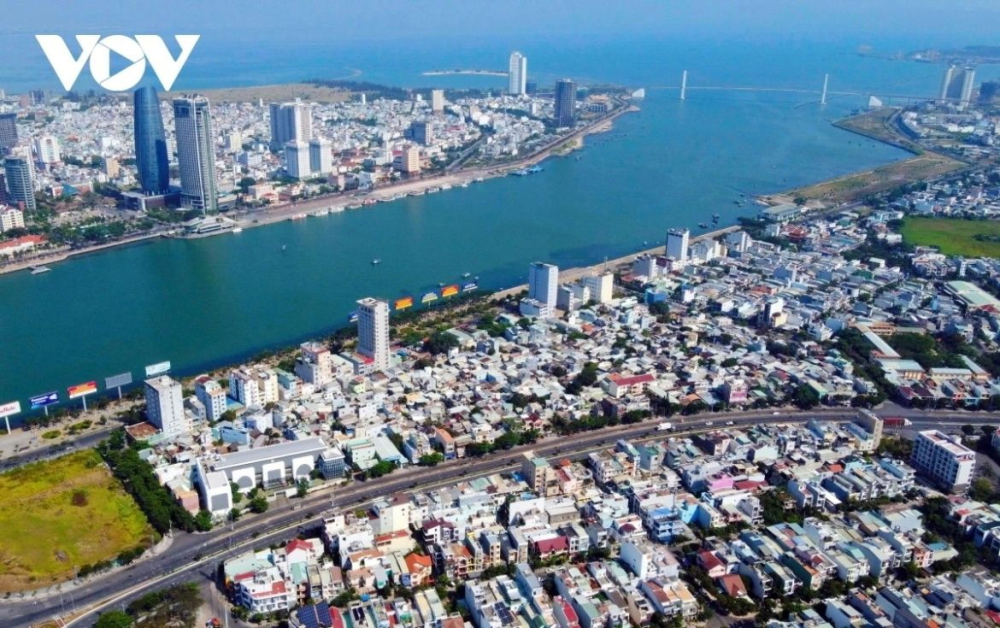
Under the revised fourth-quarter scenario, the industry and construction sector must grow by 14–14.5%, with construction alone required to expand by 25–26%. Services are also expected to grow by 14–14.5%.

Tran Van Vu, head of the Da Nang Statistics Office, pointed to the seasonal obstacles facing the city. Over the past five years, including the period following the provincial merger, fourth-quarter economic growth has consistently been lower than in preceding quarters and has never reached double digits, he said, attributing the pattern largely to the rainy season. The challenge is compounded by the low season for tourism and services, which account for a substantial share of the local economy.

Industry could help offset some of this pressure. Many factories and industrial facilities continue to operate relatively steadily during the rainy months, creating scope for industrial production to generate added value while weather-sensitive sectors face disruption.

“The focus in the fourth quarter must be on industry,” Vu said, identifying labour shortages – particularly a scarcity of general workers – as a major constraint.

Clearing project bottlenecks to unlock growth

Alongside efforts to boost output, Da Nang is seeking to accelerate projects held back by legal, land-related and site-clearance problems. The city has resolved legal obstacles affecting nearly 2,000 projects and land plots, but relatively few have progressed to implementation and begun generating economic output.

Outstanding difficulties include the complexity of retrospectively determining land prices, a shortage of qualified consultancy firms and challenges in determining investors’ financial obligations. Resolving these issues is seen as essential to bringing more projects into implementation and supporting construction and investment activity.
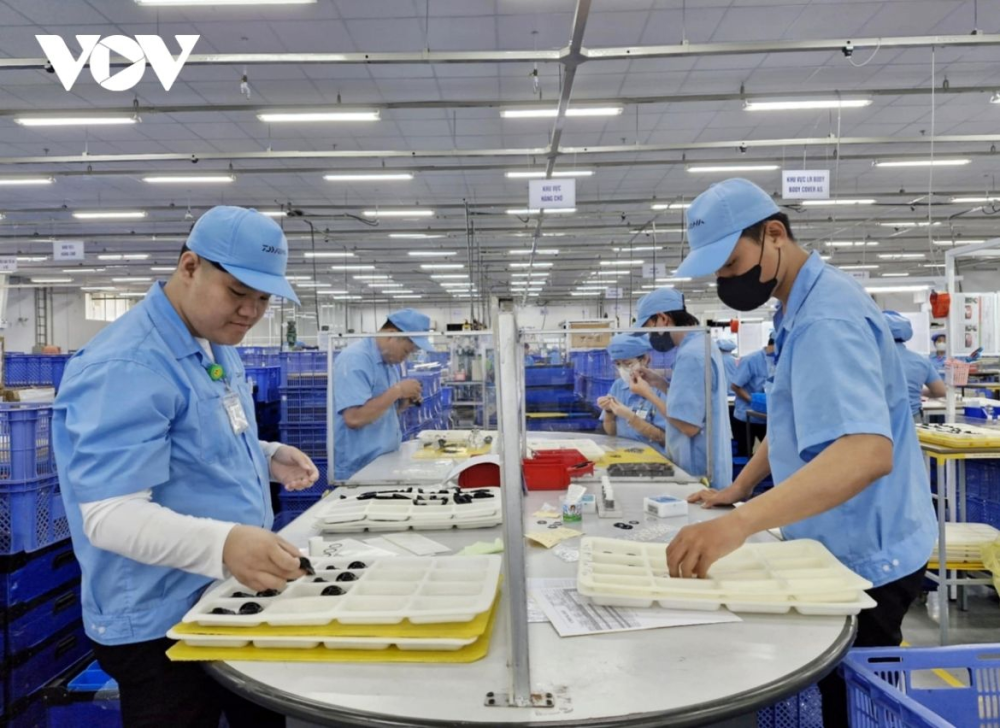
Ho Ky Minh, Permanent Vice Chairman of the Da Nang People’s Committee, noted the fourth-quarter growth plan would be implemented alongside measures to prevent and respond to natural disasters, ensuring the safety of residents, infrastructure and production during the storm season.

The city will monitor growth by sector, enterprise and individual project, prioritising key products, major businesses and projects capable of generating added value before the end of the year. It will also seek to unlock growth potential in processing and manufacturing, electricity generation, mining, finance and banking, and real estate.

Minh added that the city would classify businesses’ difficulties and organise working groups to engage directly with major revenue earners, exporters, large contributors to the state budget and enterprises experiencing slow growth.

To track progress towards the target, the municipal administration will regularly review the contributions of major sectors, including services, industry, construction and agriculture, in coordination with the municipal Statistics Office, the Department of Finance, other departments and central government agencies based in the city.

Public investment disbursement will also remain a priority, with the city reallocating capital within project management boards and at commune level to improve implementation. The chairman of the municipal People’s Committee will direct working groups to address difficulties facing businesses whose revenue, exports and budget contributions make them significant drivers of local growth.

With the final quarter coinciding with adverse weather and a seasonal slowdown in tourism, Da Nang’s ability to meet its annual target will depend on accelerating industrial output and construction, resolving persistent project bottlenecks and ensuring that investment and business activity translate into economic growth before the end of 2026.

Source: VOV

Latest Posts

Vietnam’s rapid growth reshapes Southeast Asia’s economic rankings: The Nation

Vietnam’s rapid growth reshapes Southeast Asia’s economic rankings: The Nation

Vietnam’s rapid economic growth is reshaping its position in Southeast Asia, with the country projected to overtake Indonesia in nominal GDP per capita in 2026, according to Thailand’s The Nation.

Vietnam’s nominal GDP per capita is forecast to reach US$5,259 in 2026, compared with US$5,153 for Indonesia, potentially placing it fifth among ASEAN economies, the Thai newspaper reported on October 31, citing International Monetary Fund (IMF) projections.

The outlook reflects Vietnam’s expanding manufacturing base, strong export performance and continued foreign investment. The Government has set a target of at least 10% economic growth in 2026, while real GDP grew 9.95% year on year in the third quarter.

Public investment and foreign direct investment (FDI) remain important drivers of the country’s economic expansion. In the first nine months of 2026, disbursed FDI reached US$21.1 billion, up 12% year on year, while registered capital for newly licensed projects rose 76% to US$50.3 billion.

Exports also recorded strong growth, increasing 25% to US$434 billion over the same period, according to figures cited by The Nation. International manufacturers, including Samsung Electronics and Foxconn, have continued to expand their production operations in Vietnam, reinforcing its role in global supply chains.

Mai Fujita, a senior researcher at the Institute of Developing Economies of the Japan External Trade Organization (IDE-JETRO), emphasised the importance of proactive public investment in supporting economic growth. She also highlighted the need to develop human resources and technological capabilities alongside infrastructure to sustain growth over the longer term.

Vietnam is now setting its sights on raising GDP per capita to US$8,500 by 2030, a level comparable to Thailand’s current figure.

Its projected rise in GDP per capita comes as Indonesia continues to expand at a more moderate pace, while Thailand faces slower growth and high household debt. However, nominal GDP per capita rankings are influenced by exchange rates and population size as well as economic performance, and do not in themselves reflect income distribution or living standards.

International forecasts also point to challenges ahead. The International Monetary Fund and the Asian Development Bank project Vietnam’s economy to grow by around 7.5% in 2027, below the Government’s ambition of at least 10% growth in 2026.

The longer-term challenge is therefore to translate rapid expansion into sustained productivity gains and higher incomes. Investment in skills, technology and infrastructure will be crucial to strengthening competitiveness and ensuring that Vietnam’s economic momentum can be maintained.


Vietnam manufacturing growth eases in October as export orders fall

Vietnam manufacturing growth eases in October as export orders fall

The Vietnamese manufacturing sector continued expansion in October, although price increases and supply issues limited growth in some cases.

The S&P Global Vietnam Manufacturing Purchasing Managers' Index ticked up to 52.3 points in October from 51.9 points in September, pointing to a further modest monthly strengthening in the health of the sector at the start of the fourth quarter. Business conditions have now improved in 16 consecutive months.

The overall improvement in operating conditions was limited by slower rises in output and new orders. Total new business rose for the sixth month running, despite falling new export orders weighing on growth. The rate of expansion was solid, but the slowest in the current growth sequence.

Manufacturing production expanded again in October as new orders increased on stronger customer demand. However, growth also eased here, hitting a six-month low. Some respondents said difficulties obtaining raw materials had limited production growth.

Transportation difficulties were evident in data on suppliers' delivery times, which lengthened markedly and to the largest extent since April. Rising fuel prices and poor weather conditions were among the factors leading to transportation delays, according to respondents.

Difficulties importing goods and the use of inputs to support production meant that stocks of purchases decreased solidly, despite sustained growth of input buying as companies made efforts to secure goods to support production.

Rising transportation costs were also central to the latest rise in input prices as higher costs for oil pushed up fuel prices. The rate of inflation quickened for the second month running and was the fastest since June, albeit still well below the spike seen following the outbreak of war in the Middle East. In turn, output prices also increased at a sharper pace, following only a slight rise in September.

Employment fell for the third consecutive month in October, though only slightly, with some firms citing staff resignations. Despite the smaller workforce, slower new order growth and more efficient processing of outstanding work allowed firms to reduce backlogs modestly.

Stocks of finished goods also fell as firms sold warehoused goods to draw down inventories. Post-production stocks decreased markedly, though slightly less than in September.

Optimism about better raw material availability and further improvements in market conditions supported a positive 12-month outlook for production. Sentiment hit an eight-month high but remained weaker than before the war in the Middle East.

Andrew Harker, economics director at S&P Global Market Intelligence said, "Vietnamese firms are battling to maintain growth at present amid headwinds that are making their operations more challenging. New orders continued to rise in October, feeding through to a solid increase in production, but in both cases rates of expansion slowed from September."

"The limits to growth were often due to the international environment. Fuel and transportation costs rose amid higher oil prices, while companies reported difficulties importing and exporting products. While firms are able to maintain improvements for now, they will be hoping for a more conducive environment to growth in the months ahead," he added.


Hanoi issues guidelines on green, circular projects and ESG implementation

Hanoi issues guidelines on green, circular projects and ESG implementation

Hanoi has directed municipal departments to implement government guidelines for classifying green projects, circular economy initiatives, and Environmental, Social, and Governance (ESG) frameworks, paving the way for eligible businesses to access interest rate subsidies.

Mr. Bui Duy Cuong, Vice Chairman of the Hanoi People’s Committee, signed Official Dispatch No. 6035/UBND-NNMT regarding the implementation of Prime Minister Decision No. 46/2026/QD-TTg dated September 17, 2026 (Decision 46).

The decision provides technical guidelines for classifying green projects, evaluating circular economy criteria, and applying ESG criteria.

Under Decision 46, enterprises, business households, and individual business entities executing certified green or circular projects and presenting ESG implementation reports will qualify for interest rate support considerations under applicable regulations.

Under the city’s directive, the Hanoi Department of Agriculture and Environment will serve as the focal agency, collaborating with relevant departments, sectors, and commune-level People's Committees to disseminate the decision.

The department is tasked with guiding the implementation of environmental and agricultural criteria for green and circular projects under its state management scope.

The department must compile the list of projects under the scope of Decision 46 to report to the Ministry of Agriculture and Environment. It will advise the municipal People's Committee on publishing the certified list of green, circular, and ESG-compliant projects biannually on the city's portal on June 30 and December 31.

Additionally, the department will inspect, monitor, and address violations regarding independent evaluation entities operating in agriculture and environment sectors, while supervising project compliance maintenance over time.

Concurrently, the Hanoi Department of Finance is assigned to lead data integration for investment management systems and oversee the implementation of governance frameworks. It will assess financial resources and state budget capabilities according to decentralized authority, alongside mobilizing alternative financial mechanisms to support green and circular programs.

The Department of Finance will also inspect and monitor independent rating agencies and ensure project compliance according to legal auditing and administrative violation frameworks.

The Hanoi Department of Industry and Trade will oversee project implementation across energy, processing, and manufacturing sectors. The department is tasked with promoting resource-efficient, low-emission, and sustainable production models, while evaluating criteria for industrial symbiosis and circular linkages.

The Hanoi Department of Construction will handle projects in construction, urban development, technical infrastructure, and transport, promoting resource-saving materials, low-carbon building technologies, and sustainable urban solutions.

Under Decision 46, a green project must meet specific eligibility requirements across designated sectors. Attached technical appendixes outline requirements for ten energy project categories, three transport categories, two construction categories, three water resource categories, 12 agriculture, forestry, fisheries, and biodiversity categories, six processing and manufacturing categories, and nine environmental service categories.

For circular economy projects, the regulations define eight project groups for circular design and manufacturing, two for circular utilization, five for resource recovery, and four for industrial symbiosis and circular integration.


See all blog