Lumen Vietnam Fund

Blog

International financial institutions upgrade Vietnam 2026 GDP growth forecasts

International financial institutions upgrade Vietnam 2026 GDP growth forecasts

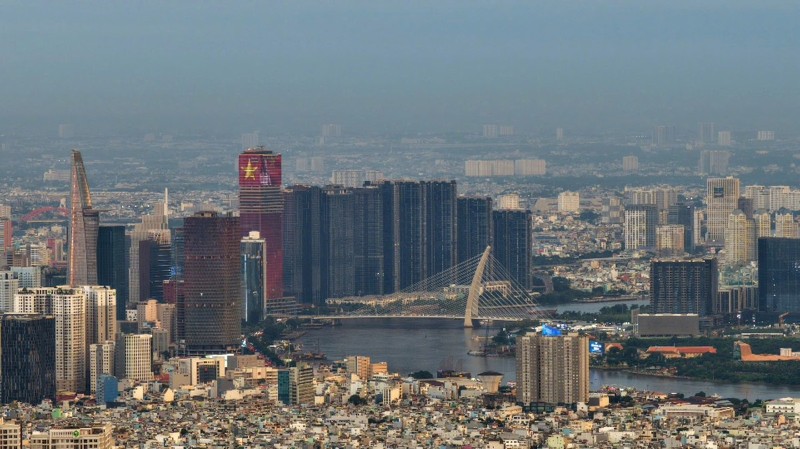
Vietnam’s gross domestic product expanded by 9.95 percent year-on-year in the third quarter of 2026, bringing nine-month economic growth to 9.01 percent.

The strong performance reinforces positive assessments from international financial institutions regarding Vietnam’s economic outlook, with forecasts indicating that growth momentum will persist through the final months of the year.

According to the National Statistics Office under the Ministry of Finance, Q3 GDP growth of 9.95 percent outpaced the 8.15 percent recorded in Q1 and 8.81 percent in Q2. For the first nine months of 2026, the industry and construction sector served as the primary growth driver, expanding by 11.21 percent and contributing nearly half of total value added. The services sector grew by 8.69 percent, while agriculture, forestry, and fisheries expanded by 4.02 percent.

While global economic growth projections from the OECD, UN, and IMF remain subdued compared to 2025 levels, Southeast Asia’s growth outlook remains favorable. Within the ASEAN region, ADB projects average growth at 4.7 percent and AMRO at 4.8 percent.

Vietnam leads all regional peers with projected 2026 growth between 7.5 percent and 8.2 percent, significantly higher than Indonesia, Malaysia, Singapore, the Philippines, and Thailand.

Major international financial institutions have repeatedly upgraded their full-year forecasts for Vietnam.

AMRO projects 2026 growth at 7.5 percent, while the ADB raised its forecast to 7.8 percent for 2026 and 7.6 percent for 2027. The IMF increased its projection to 8.2 percent, UOB upgraded its outlook to 8.5 percent citing strong AI-driven technology momentum, and Standard Chartered issued the highest forecast at 9.5 percent.

Mr. Tim Leelahaphan, Senior Economist for Thailand and Vietnam at Standard Chartered Bank, noted that the Vietnamese economy continues to demonstrate strong resilience, underpinned by robust domestic demand, active trade, and solid industrial manufacturing performance that should sustain momentum through year-end.

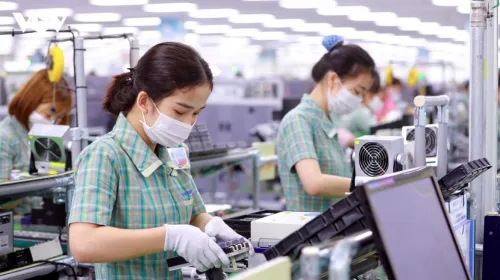
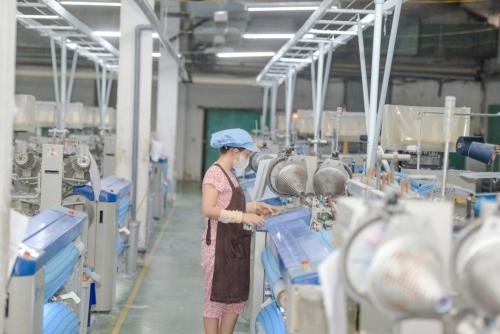
Growth momentum continues to benefit from expanding manufacturing, steady foreign direct investment inflows, and strong global demand for technology products linked to supply chain relocations and artificial intelligence.

However, international analysts emphasize that due to its high level of trade openness, Vietnam must remain vigilant against external risks including geopolitical tensions, global trade volatility, and demand shifts across major export markets.

​

Source: Van Nguyen

Latest Posts

Vietnam’s rapid growth reshapes Southeast Asia’s economic rankings: The Nation

Vietnam’s rapid growth reshapes Southeast Asia’s economic rankings: The Nation

Vietnam’s rapid economic growth is reshaping its position in Southeast Asia, with the country projected to overtake Indonesia in nominal GDP per capita in 2026, according to Thailand’s The Nation.

Vietnam’s nominal GDP per capita is forecast to reach US$5,259 in 2026, compared with US$5,153 for Indonesia, potentially placing it fifth among ASEAN economies, the Thai newspaper reported on October 31, citing International Monetary Fund (IMF) projections.

The outlook reflects Vietnam’s expanding manufacturing base, strong export performance and continued foreign investment. The Government has set a target of at least 10% economic growth in 2026, while real GDP grew 9.95% year on year in the third quarter.

Public investment and foreign direct investment (FDI) remain important drivers of the country’s economic expansion. In the first nine months of 2026, disbursed FDI reached US$21.1 billion, up 12% year on year, while registered capital for newly licensed projects rose 76% to US$50.3 billion.

Exports also recorded strong growth, increasing 25% to US$434 billion over the same period, according to figures cited by The Nation. International manufacturers, including Samsung Electronics and Foxconn, have continued to expand their production operations in Vietnam, reinforcing its role in global supply chains.

Mai Fujita, a senior researcher at the Institute of Developing Economies of the Japan External Trade Organization (IDE-JETRO), emphasised the importance of proactive public investment in supporting economic growth. She also highlighted the need to develop human resources and technological capabilities alongside infrastructure to sustain growth over the longer term.

Vietnam is now setting its sights on raising GDP per capita to US$8,500 by 2030, a level comparable to Thailand’s current figure.

Its projected rise in GDP per capita comes as Indonesia continues to expand at a more moderate pace, while Thailand faces slower growth and high household debt. However, nominal GDP per capita rankings are influenced by exchange rates and population size as well as economic performance, and do not in themselves reflect income distribution or living standards.

International forecasts also point to challenges ahead. The International Monetary Fund and the Asian Development Bank project Vietnam’s economy to grow by around 7.5% in 2027, below the Government’s ambition of at least 10% growth in 2026.

The longer-term challenge is therefore to translate rapid expansion into sustained productivity gains and higher incomes. Investment in skills, technology and infrastructure will be crucial to strengthening competitiveness and ensuring that Vietnam’s economic momentum can be maintained.


Vietnam manufacturing growth eases in October as export orders fall

Vietnam manufacturing growth eases in October as export orders fall

The Vietnamese manufacturing sector continued expansion in October, although price increases and supply issues limited growth in some cases.

The S&P Global Vietnam Manufacturing Purchasing Managers' Index ticked up to 52.3 points in October from 51.9 points in September, pointing to a further modest monthly strengthening in the health of the sector at the start of the fourth quarter. Business conditions have now improved in 16 consecutive months.

The overall improvement in operating conditions was limited by slower rises in output and new orders. Total new business rose for the sixth month running, despite falling new export orders weighing on growth. The rate of expansion was solid, but the slowest in the current growth sequence.

Manufacturing production expanded again in October as new orders increased on stronger customer demand. However, growth also eased here, hitting a six-month low. Some respondents said difficulties obtaining raw materials had limited production growth.

Transportation difficulties were evident in data on suppliers' delivery times, which lengthened markedly and to the largest extent since April. Rising fuel prices and poor weather conditions were among the factors leading to transportation delays, according to respondents.

Difficulties importing goods and the use of inputs to support production meant that stocks of purchases decreased solidly, despite sustained growth of input buying as companies made efforts to secure goods to support production.

Rising transportation costs were also central to the latest rise in input prices as higher costs for oil pushed up fuel prices. The rate of inflation quickened for the second month running and was the fastest since June, albeit still well below the spike seen following the outbreak of war in the Middle East. In turn, output prices also increased at a sharper pace, following only a slight rise in September.

Employment fell for the third consecutive month in October, though only slightly, with some firms citing staff resignations. Despite the smaller workforce, slower new order growth and more efficient processing of outstanding work allowed firms to reduce backlogs modestly.

Stocks of finished goods also fell as firms sold warehoused goods to draw down inventories. Post-production stocks decreased markedly, though slightly less than in September.

Optimism about better raw material availability and further improvements in market conditions supported a positive 12-month outlook for production. Sentiment hit an eight-month high but remained weaker than before the war in the Middle East.

Andrew Harker, economics director at S&P Global Market Intelligence said, "Vietnamese firms are battling to maintain growth at present amid headwinds that are making their operations more challenging. New orders continued to rise in October, feeding through to a solid increase in production, but in both cases rates of expansion slowed from September."

"The limits to growth were often due to the international environment. Fuel and transportation costs rose amid higher oil prices, while companies reported difficulties importing and exporting products. While firms are able to maintain improvements for now, they will be hoping for a more conducive environment to growth in the months ahead," he added.


Hanoi issues guidelines on green, circular projects and ESG implementation

Hanoi issues guidelines on green, circular projects and ESG implementation

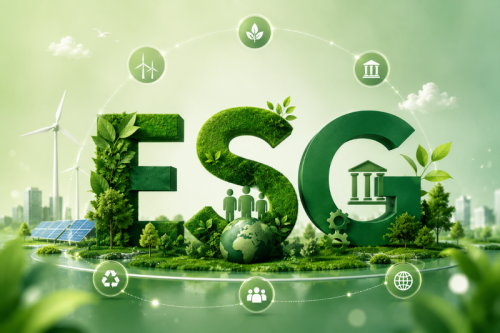
Hanoi has directed municipal departments to implement government guidelines for classifying green projects, circular economy initiatives, and Environmental, Social, and Governance (ESG) frameworks, paving the way for eligible businesses to access interest rate subsidies.

Mr. Bui Duy Cuong, Vice Chairman of the Hanoi People’s Committee, signed Official Dispatch No. 6035/UBND-NNMT regarding the implementation of Prime Minister Decision No. 46/2026/QD-TTg dated September 17, 2026 (Decision 46).

The decision provides technical guidelines for classifying green projects, evaluating circular economy criteria, and applying ESG criteria.

Under Decision 46, enterprises, business households, and individual business entities executing certified green or circular projects and presenting ESG implementation reports will qualify for interest rate support considerations under applicable regulations.

Under the city’s directive, the Hanoi Department of Agriculture and Environment will serve as the focal agency, collaborating with relevant departments, sectors, and commune-level People's Committees to disseminate the decision.

The department is tasked with guiding the implementation of environmental and agricultural criteria for green and circular projects under its state management scope.

The department must compile the list of projects under the scope of Decision 46 to report to the Ministry of Agriculture and Environment. It will advise the municipal People's Committee on publishing the certified list of green, circular, and ESG-compliant projects biannually on the city's portal on June 30 and December 31.

Additionally, the department will inspect, monitor, and address violations regarding independent evaluation entities operating in agriculture and environment sectors, while supervising project compliance maintenance over time.

Concurrently, the Hanoi Department of Finance is assigned to lead data integration for investment management systems and oversee the implementation of governance frameworks. It will assess financial resources and state budget capabilities according to decentralized authority, alongside mobilizing alternative financial mechanisms to support green and circular programs.

The Department of Finance will also inspect and monitor independent rating agencies and ensure project compliance according to legal auditing and administrative violation frameworks.

The Hanoi Department of Industry and Trade will oversee project implementation across energy, processing, and manufacturing sectors. The department is tasked with promoting resource-efficient, low-emission, and sustainable production models, while evaluating criteria for industrial symbiosis and circular linkages.

The Hanoi Department of Construction will handle projects in construction, urban development, technical infrastructure, and transport, promoting resource-saving materials, low-carbon building technologies, and sustainable urban solutions.

Under Decision 46, a green project must meet specific eligibility requirements across designated sectors. Attached technical appendixes outline requirements for ten energy project categories, three transport categories, two construction categories, three water resource categories, 12 agriculture, forestry, fisheries, and biodiversity categories, six processing and manufacturing categories, and nine environmental service categories.

For circular economy projects, the regulations define eight project groups for circular design and manufacturing, two for circular utilization, five for resource recovery, and four for industrial symbiosis and circular integration.


See all blog